Deliberation, Not Debate: A Casual Conversation on Writing Your Story with AI
Reflections on Session One of a Four-Part Series
By Paul Truesdell
This piece is written for those who attended the first session of our four-part series on using artificial intelligence to write your own personal stories. It is also written for the lady who arrived a bit late and missed the handout, for those who could not attend but wish they had, and for anyone considering joining us for session two. Consider this your on-ramp. Consider this your invitation to keep going.
— — —
One of the things I enjoy most in life, beyond doing the talking myself, is listening. Really listening. Not the kind of listening where you are just waiting for the other person to stop so you can say your piece, but the kind where you are genuinely trying to understand the why behind what someone is telling you.
In my world, the why is what we call the qualitative analysis. You have your quantitative side, of course, the facts and figures, the hard numbers. And those numbers tell a powerful story. But sometimes the numbers alone do not tell the full story. You can have a situation where one plus one plainly equals two, and yet the consensus among a great many people will insist the answer is three. No amount of arithmetic will change their minds. You see this all the time in life. Something is objectively, unequivocally wrong, and yet to another group of perfectly reasonable folks, it is just fine. They see it differently, and that is the end of the discussion.
That gap between what the numbers say and what people believe is where I like to spend my time. When I teach, when I instruct, when I advise clients on their financial futures, I like to explain the why. I like to walk people through the deliberative process. How did I arrive at this answer? How did I come to this conclusion? What is the common sense path that got us here?
— — —
The Difference Between Debate and Deliberation
One of the things I see throughout the world, and increasingly so, is a tendency for men and women to engage in debate rather than discussion. This is the very reason I use the phrase a casual conversation when describing what we do. I will often pair it with the words cocktail and coffee, because the image I want you to hold in your mind is that of breaking bread together, having something to drink, and simply talking. People have been doing this for centuries. It is not a debate. It is a conversation.
We have all met people, usually around the holidays, Thanksgiving, Christmas, birthday parties, who turn every gathering into a contest. The conversation becomes a debate. People get excited, then agitated, then angry. Somebody storms off. Somebody else sits quietly fuming into their mashed potatoes. And every sensible person in the room thinks the same thing: I do not want anything to do with that.
A wonderful conversation between people, even people who do not agree on much of anything, is one that has moved from debate into deliberation. Debate is about owning another person. It is one-upmanship. It is about winning. I have known people you cannot even share a meal with because they will turn away from you, ignore you, and only engage when they see an opportunity to elevate themselves at your expense. Whether that comes from deep insecurity or simply a gap in their personal development, I do not know and frankly do not care. The result is the same. They are debaters, not deliberators.
Deliberation is about getting somewhere. It is two or more people sitting down and honestly working through a question together. It is what I sometimes call sense-making, which is the practice of not just expressing an opinion, but explaining how you arrived at that opinion, the sequence of thought and experience that brought you to where you stand. When two different opinions are laid out this way, they can both be tested, challenged, and examined. And from that exchange, you can actually make sense of the issue. That is deliberation. That is how adults solve problems.
I was fortunate recently to have that exact kind of experience when I presented the first session of a four-part series on using artificial intelligence to help people write their own personal stories.
— — —
The Overton Window and Why It Matters Here
Before I get into the specifics of what we covered, I want to take a moment to explain a concept that is useful for understanding how people think about what is acceptable and what is not, whether in politics, in public discourse, or in something as personal as your own writing style. It is called the Overton Window.
The concept was developed in the 1990s by Joseph Overton, a policy analyst at the Mackinac Center for Public Policy. Overton observed that at any given time, there exists a range of ideas and policies that the general public considers acceptable or at least worthy of serious discussion. Ideas inside that window are considered mainstream. Ideas outside it are considered radical or extreme. Politicians, Overton argued, generally will not champion policies that fall outside the window because doing so risks their electoral standing. The window is not fixed, however. It shifts over time as societal values evolve, as advocacy groups make their case, and as circumstances change. Prohibition, for example, was once squarely inside the window. Today, virtually no serious person advocates for making alcohol illegal again. The window moved.
Now, some critics have taken issue with the Overton Window over the years. Some argue it reinforces a false idea of a moderate center, that it oversimplifies the genuine diversity of opinion that exists even among people who call themselves moderates. Others have suggested the concept can be co-opted to serve particular ideological ends, that it is biased, or that it inadequately captures the full complexity of how ideas gain or lose traction in a free society. Those criticisms have merit as academic discussion points, but in my experience, the people who spend the most energy attacking a framework like the Overton Window tend to be the same folks who prefer debate over deliberation. They are more interested in discrediting the tool than in using it to understand one another.
Here is why I bring it up. I want you to apply the Overton Window to yourself, personally, as a writer. What is the most simple and the most complex type of writing that you are comfortable with? Where does your own window sit? Do not let someone else tell you where your window should be. That is your business.
I have a memory from kindergarten or first grade, I cannot recall exactly which, of a teacher who covered the picture on the page of a book and asked me to read the words and then describe what I imagined. I did my best, and when she uncovered the illustration, it was nothing like what I had described. She smiled and told me something I have never forgotten: reading allows you to see whatever you want to see, but a picture shows you only what it shows you. That, right there, is the power of the written word. And that kindergarten lesson, as simple as it was, defined the boundaries of my own Overton Window when it comes to writing. Words are more powerful than pictures because they invite the reader to participate in the creation of the image. Your writing can do the same thing if you let it.
— — —
What We Actually Did in Session One
Let me make one thing perfectly clear. I spent roughly forty hours, and yes, that sounds like a lot, because it is, thinking about that very first meeting and how to set the stage properly. I knew from experience that in any four-part series, you start big and the numbers dwindle. Most people would not come back for session two. And if someone walks in for session two without having attended session one, catching up is going to be a real challenge. So I put a great deal of thought into building a foundation that could stand on its own and also serve as a springboard for everything that follows.
The one thing I knew for certain about my audience was that everyone in the room would be retired. So while the series could technically cover everything from creative writing to technical writing, talking about technical writing was not going to spark much enthusiasm in this crowd. What I believed would resonate, because it resonates deeply with me, is the desire that comes with age to record the things we have done in life. I have been working on my own stories extensively for the past ten years. Not some grand opus, not a sweeping autobiography, just short stories. Individual moments. And that, I believe, is the key insight every aspiring writer needs to absorb: whether it is War and Peace or The Great Gatsby, every great work of literature is, at its foundation, a collection of short stories. It is how you expand them, twist them, layer in the details and the humanity, that makes the difference.
This was not a class for published authors. I specifically wanted men and women who had not really written anything in a long time but who had a spark they wanted to rekindle. People who had lived rich lives and had stories they wanted to tell, not to a lecture hall of strangers, but to the people they love. Children and grandchildren. Stories you would be comfortable sharing over the kitchen table, and perhaps a few you would not be comfortable saying out loud but could put into written words.
— — —
Comedy, Style, and the Freedom to Write Your Way
I opened the session by talking about comedy, which might seem like an odd choice for a writing class, but hear me out. I used comedians as an analogy for writing styles. George Carlin was observational comedy at its finest, and nearly everyone in the room agreed we all wish he were still around. Robin Williams was manic brilliance. The Three Stooges were slapstick. Buddy Hackett told long, winding stories with a dagger of a punchline right at the end. Don Rickles was the personal attack, and Andrew Dice Clay followed a similar path. Then you had the self-deprecating genius of Rodney Dangerfield. One person might love Carlin and cannot stand Rickles. Another person is the opposite. It is all comedy. It is all valid.
Writing works the same way. Some people write short stories, others write novels. Some prefer fiction, others nonfiction. Some like short, punchy sentences. Others build long, flowing ones. Do you prefer reading material at a fourth-grade level or a doctoral level? The point was simple and it was important: you, and only you, are writing your story. You can tell it any way you want. You do not have to follow somebody else's rules.
From there, I moved into the difference between what we loosely call right-brain and left-brain thinking. The left brain is analytical, precise, concerned with grammar and punctuation and structure. The right brain is expressive, creative, emotional. Whether that distinction is neurologically exact is beside the point. What matters is the practical reality we all experience: when you are in the middle of a creative flow, writing things down as fast as the ideas come, your analytical side will try to interrupt. You notice a misspelling, a missing comma, an awkward phrase, and suddenly your left brain has hijacked the operation. You cannot do both at the same time, not well, anyway. Being able to switch-hit, to borrow from baseball, batting equally well from the right side and the left, is a rare commodity.
I told the group plainly: do not get stuck in the weeds of grammar and punctuation and formality. There is a famous book, at least it is famous to me, called The Elements of Style by Strunk and White. I have taught classes on it. But the core truth is that one style does not fit everybody. If you want to put an exclamation point in the middle of a sentence because that is where your voice rises, then do it. Consider the words I will. Say them with a decreasing tone, begrudgingly, and it means one thing. Say them with an upward inflection, with enthusiasm, and it means something entirely different. Punctuation, underlining, bold text, even parenthetical notes like with enthusiasm or with dread, can help your reader hear your voice the way you intend it.
— — —
Outlines, Audio, and the Role of AI
I talked about two very different approaches to writing, using two well-known authors as examples. Michael Connelly, who wrote the Bosch series and many other fine novels, is known for starting at the beginning and just writing straight through. John Grisham, on the other hand, outlines everything meticulously before he writes a single sentence of narrative. Both produce wonderful books. Neither approach is wrong.
My own method is something of a hybrid. I understand the value of an outline, and I also understand the power of just telling a story from start to finish, off the cuff, letting it pour out. But the revision, the rewrite, the careful work of refining and sharpening, that takes editing. And sometimes the editing process requires you to take everything you have written and break it out into segments, then work each segment individually. So you either pour it all out and then impose structure, or you build the structure first and then fill in the story. Either way, you end up in the same place. And that is where AI comes in.
Here is the critical thing I wanted everyone to understand: AI is not creative. You are the creative person. AI is like the left side of your brain, taking your raw words and pulling them together so they make mechanical sense. It handles the grammar, the structure, the formatting. You provide the soul, the voice, the stories that only you can tell. That partnership, your creativity and AI's organizational ability, is what this entire series is about.
I demonstrated this by sharing a story I wrote called The Blob, about an incident back in 1980 or 1981 when I was trying to catch a burglar in the city of Tampa and everything was going perfectly until, through no fault of my own, I met what I came to call the blob. I walked the group through how I built the outline, how I recorded the audio, how I then fed that audio to AI for a first pass, and how I deliberately did only minimal editing. One person in the audience caught a detail, a mix-up between the words silver and gold, and that was exactly the teaching moment I had hoped for. When you only read your work, you miss things. When you only listen, you miss things. But when you read and listen at the same time, you catch errors you never would have found otherwise. That is simply how the brain works.
I then showed the group my discussion page, the notes I had made after finishing the initial draft. Those notes included additional memories that the story had triggered: two people I knew as Scooter, a story about Billy Graham, the murder of a police officer's father in downtown Tampa, and a variety of other recollections that would add depth and texture to the original piece. All of those details paint a vivid picture of what downtown Tampa was like in the late 1970s and early 1980s, which is nothing at all like what it is today.
— — —
Talking to Yourself and the Tools of the Trade
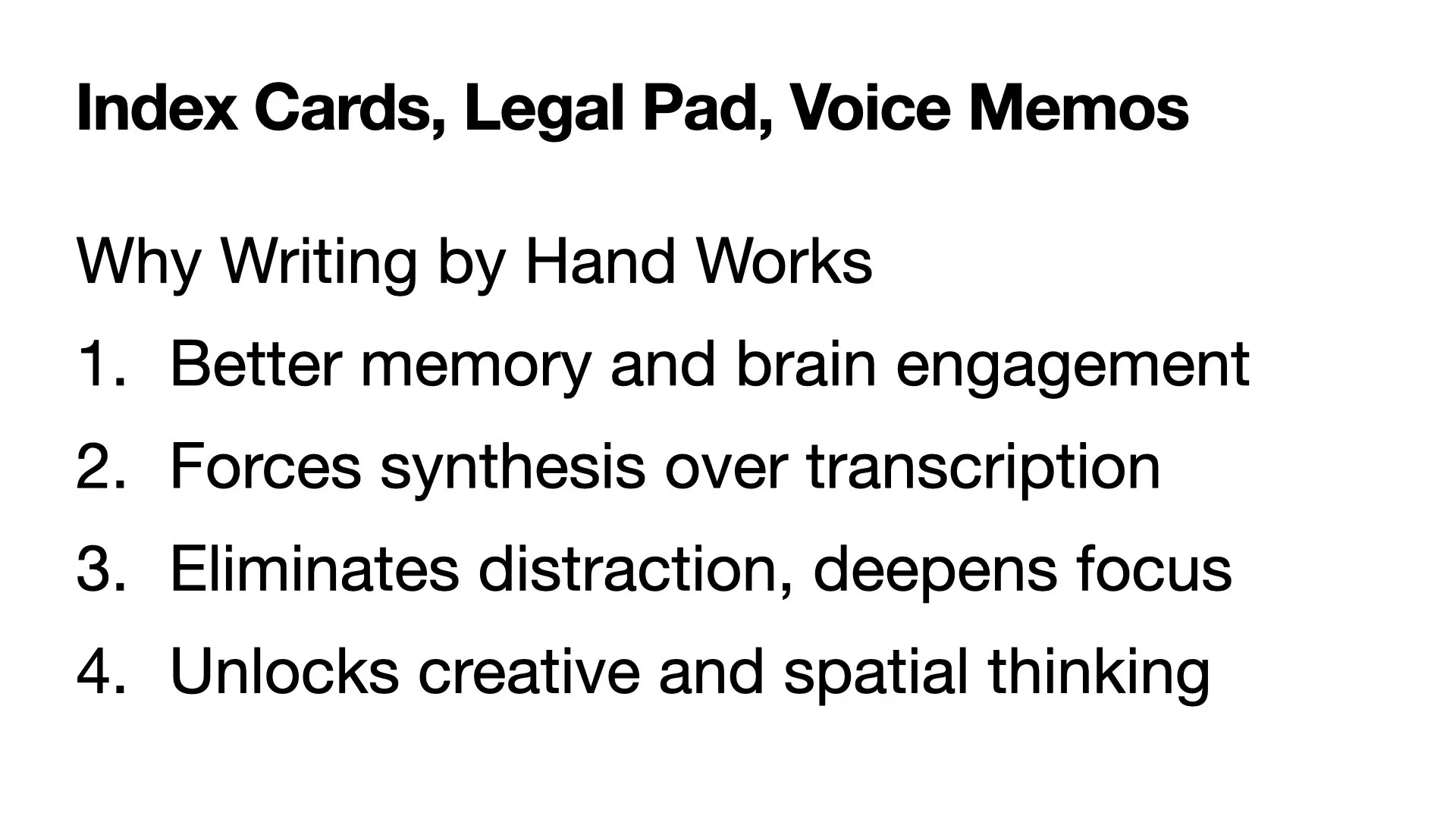
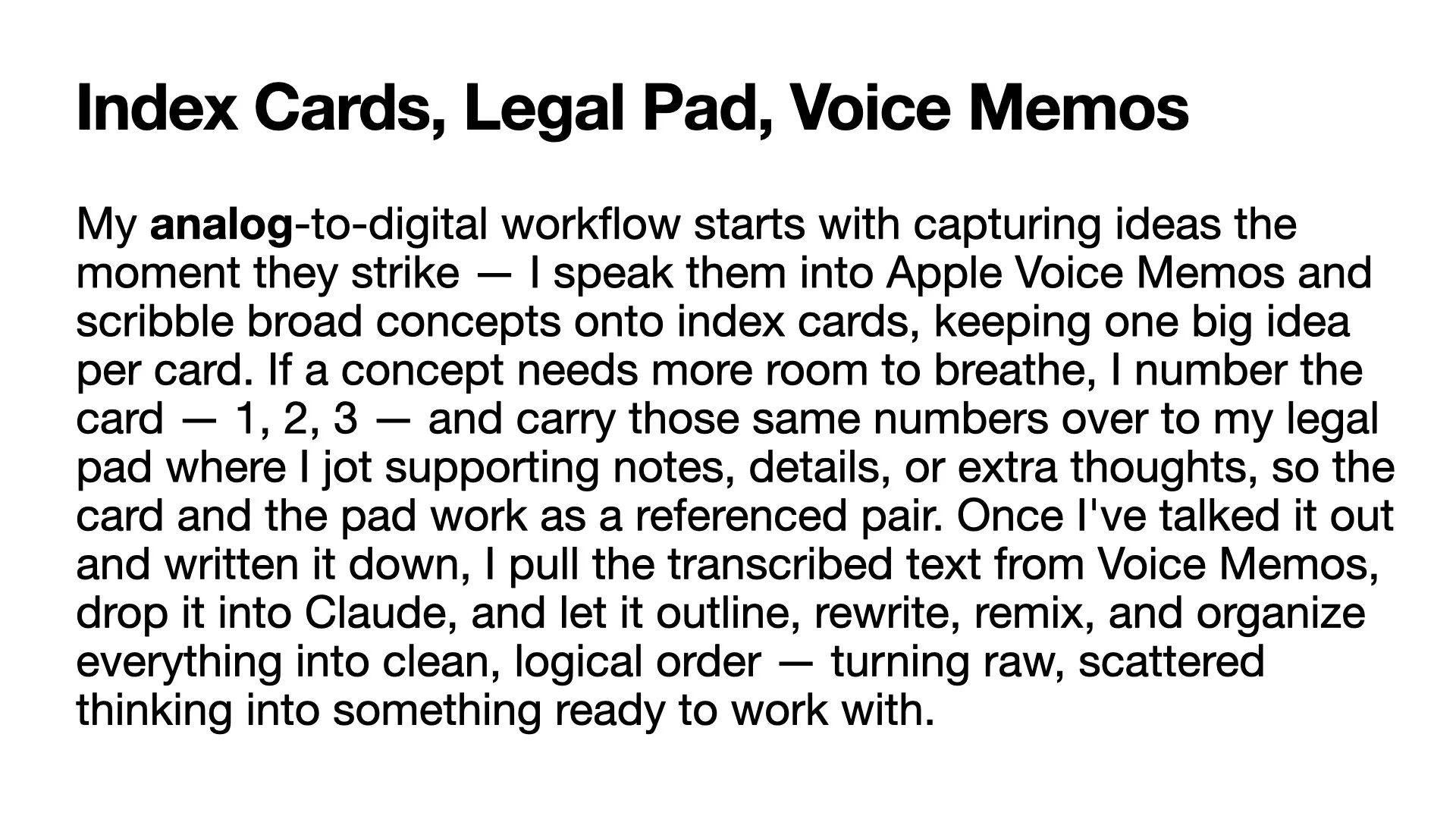
We wrapped up the session with a discussion of Apple Voice Memos and the concept of an internal monologue, the practice of walking yourself through your thoughts out loud, narrating your ideas as if you were explaining them to someone else. Everyone in the room agreed that this is hard. When you live with someone, talking to yourself feels odd. But I will tell you plainly: I do it all the time. This very piece you are reading was outlined, organized, and initially recorded while I was walking through a house I own, alone, just pacing the rooms and articulating my ideas aloud. I made my notes first, then I talked it all through by audio. That audio went from voice to text, then I gave mechanical instructions to AI, and the result was refined into what you are reading now.
We also discussed the different AI programs available and what each does well and poorly. Every AI system is written and programmed by individuals, which means each has its own personality and its own limitations. I explained, for example, that some AI programs will not let you describe a violent crime, even if it happened to you, because the content violates their guidelines. You could talk about being in a gunfight, about surviving, about what it felt like, and the system rejects it. But if you change the characters to Martians fighting with ray guns, suddenly it is perfectly fine. Then you have to rewrite the Martian version back into your actual experience. This is the kind of practical knowledge that saves you hours of frustration.
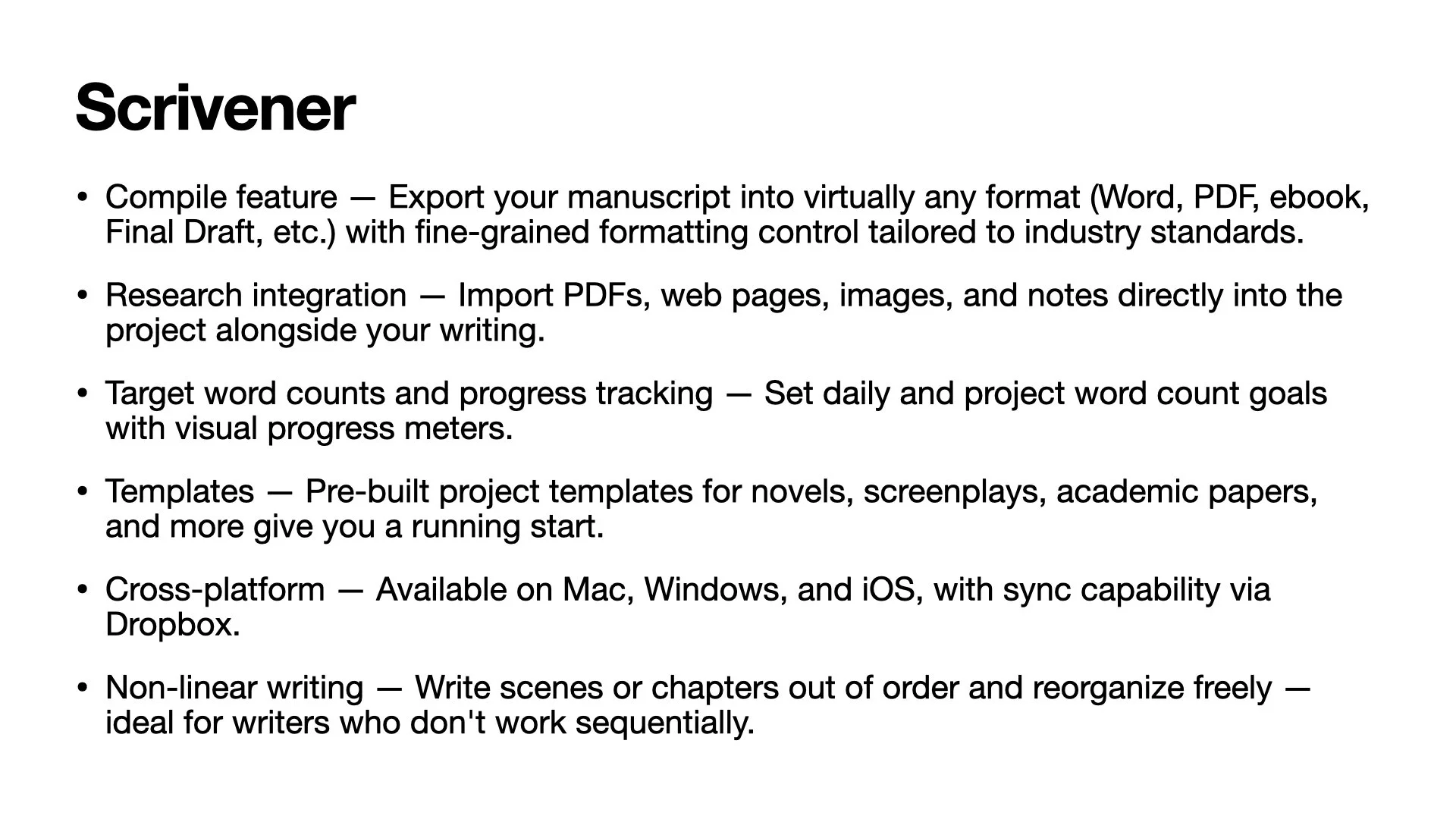
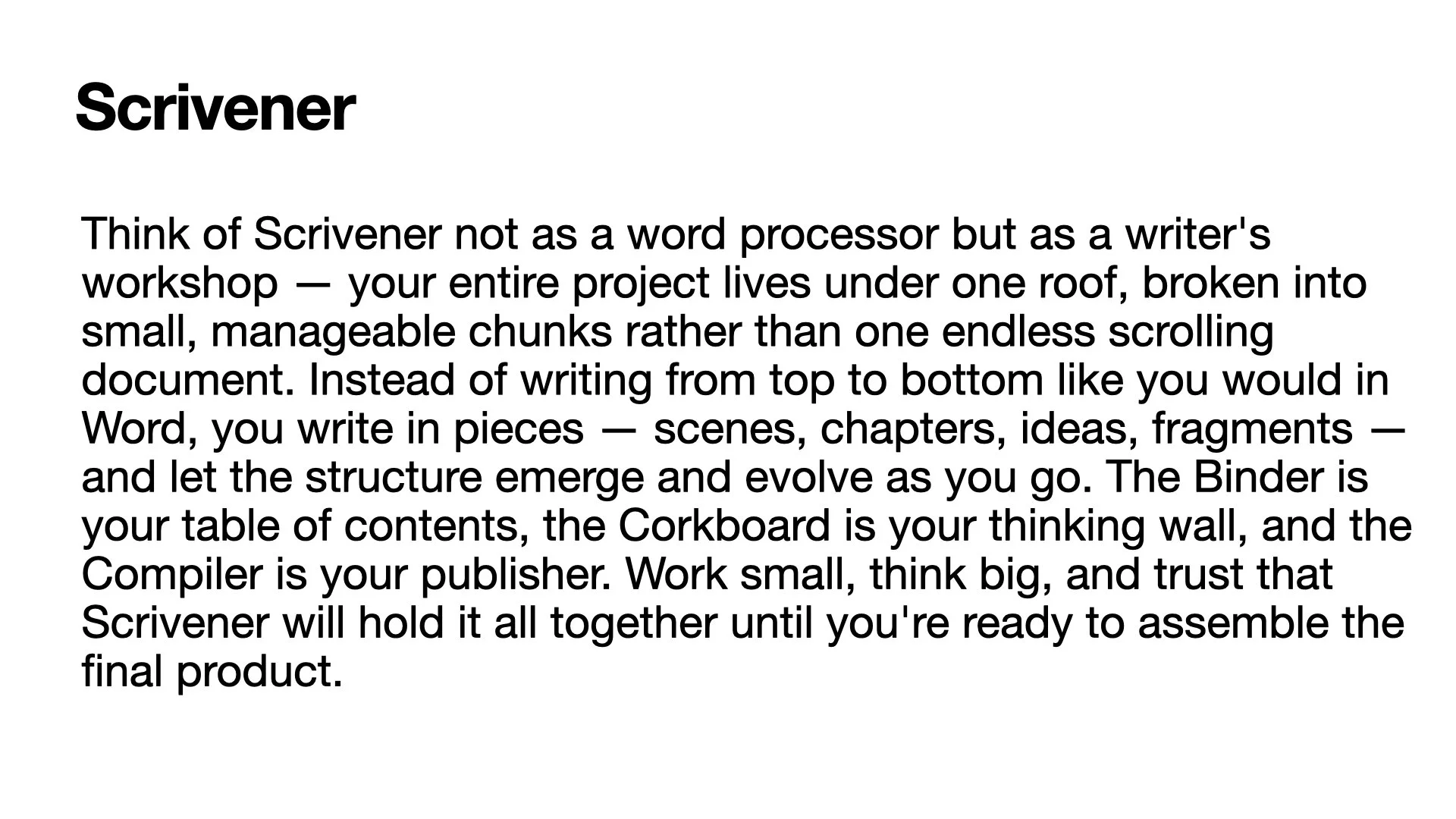
I recommended Claude AI as a particularly strong tool for this kind of work, and I emphasized the importance of training the AI to understand your voice, your style, your preferences. That was the big takeaway from session one. Before you can use AI effectively, it has to know who you are as a writer. Think of it like a new assistant on the first day of work. The faster you get that assistant up to speed on how you operate, the more productive the partnership becomes.
— — —
The Rest of the Story
If the structure of that first session felt a little different, a little unconventional, there was a reason for that. I deliberately designed it like an episode of Breaking Bad, where you see the ending first and then spend the rest of the episode figuring out how you got there. Or, if you prefer, like Paul Harvey and his famous sign-off. I gave the group the destination first, the finished product, and then walked them back through the process that created it. I spent a long time researching the best way to approach this, and that structure, destination first, process second, made the most sense to me. That is the deliberative, common-sense approach in action.
I was fortunate in another way, too. Nobody in our group of thirty wanted to debate. We did not have a single person who tried to one-up anyone else or hijack the conversation. I had made it clear from the start that this was designed for people who have not written in a long time, maybe not since high school or college, but who have lived lives worth recording and stories worth telling. The group honored that spirit, and it made for one of the most enjoyable casual conversations I have had in a very long time.
— — —
What Comes Next
The format I used in session one, the Breaking Bad approach, was a one-time setup. Sessions two, three, and four will be a straight run. We know where we are going now. We have our bearings. The continuation will be more hands-on, more practical, more of alright, I understand what we are doing, now let us do it. I will be asking everyone to bring their phone, their laptop, their iPad, whatever they are comfortable with, because we will be getting into the details. I should mention that I work exclusively within the Apple ecosystem, iPhone, iPad, and Mac, because of the seamless flow between devices. I will be talking about how you can pick up your work on one device and continue it on another without losing your train of thought. If you use Android, there is nothing wrong with that, but my demonstrations will be from the Apple side.
Most people at the first session did not take a lot of notes, and I think that was perfectly fine. It was a lot to absorb. The goal was to let it wash over you, to internalize the concepts and the philosophy before diving into the mechanics. Going forward, we will be building on that foundation.
— — —
The Bottom Line
Here is what I want you to take away from all of this. The big idea is not a debate. It is a conversation. It is not a seminar or a workshop. It is a casual conversation that starts with me talking about where we are headed, and then opens up for questions and discussion. The key principle throughout is the deliberative process. How did we get here? What is the common sense? When you encounter someone who cannot engage in a deliberative conversation, someone who cannot explain how they arrived at their position and can only offer declarations and arguments, those are not the people you want managing your money, investigating a crime, practicing medicine, or serving in government. That is the debate mentality, and it leads nowhere good.
The same principle applies to your writing. Do not let anyone bully you into a style that is not yours. Do not feel that you are being prodded. You are writing for yourself, and you are writing for the people you love. You know your voice. You know your audience. Start with one story. Just one. Like that gentleman at the end of our session who said he had lived such a varied life he did not even know where to begin. I held up one finger and somebody in the room said it before I could: one story. That is exactly right. The first step in a long journey is just that, the first step.
One final thought. The reason I created my Seven Components of Wealth and Status is that genuine prosperity is not just about money. The second most important component is physical wealth, which I define as engaging daily in strength, endurance, and flexibility training, with natural nutrition and hydration, and everything in moderation. Take care of yourself physically. You will spend less on healthcare, you will live longer at a higher level, and you will have more years in which to tell your stories and enjoy the ones told by others.
That is the deliberative, common-sense process. It is how I manage my business, how I serve my clients, and how I teach. And I loved every minute of that first session because the people in the room were there for the right reasons, and we made real progress together.
So come back for session two. Bring your devices. Bring your stories. And bring that spark.
Tippecanoe and Tyler Too, I'm out of here.
— Paul Truesdell
A Quick Supplement for Session One Attendees
A Few Additional Notes Before We Move Forward
By Paul Truesdell
As you read through the main write-up from our first session, you will have a solid sense of what we covered and why we covered it the way we did. This supplement is meant to address a handful of practical items as we head into sessions two, three, and four.
— — —
Bring Your Devices
The remaining sessions will be more mechanical and hands-on than the first. We have done the setup. We did the Breaking Bad introduction. Now we are going to start getting into the actual writing. I would strongly encourage you to bring the electronic devices you plan to use going forward. Your phone, in particular, is going to be valuable, especially for those of you with an iPhone. If you have a laptop or an iPad, bring those as well. We will be working with the tools in real time, and having your device in front of you will make all the difference.
— — —
Follow the Checklist and Identify Your Voice
Before we meet again, I would encourage you to follow the directions from session one, beginning with identifying your own voice. The checklist I provided is genuinely valuable, and I want you to understand where it came from. That checklist was not something I simply sat down and wrote off the top of my head. I took the same question and put it to six different AI programs, received six different responses, and then sat down with the good old-fashioned human brain and pulled the best of each into a single, cohesive guide. If six separate artificial intelligence programs all agree that these are the things you should be thinking about as a writer, that is worth paying attention to.
I understand the temptation to jump in with both feet and start writing immediately. That enthusiasm is a wonderful thing, and I do not want to dampen it. But preparation is everything. That should have been made perfectly clear in session one. The time you invest now in understanding your own voice and preferences will pay enormous dividends when we get deeper into the mechanics of working with AI. Trust the process.
— — —
Invite a Friend
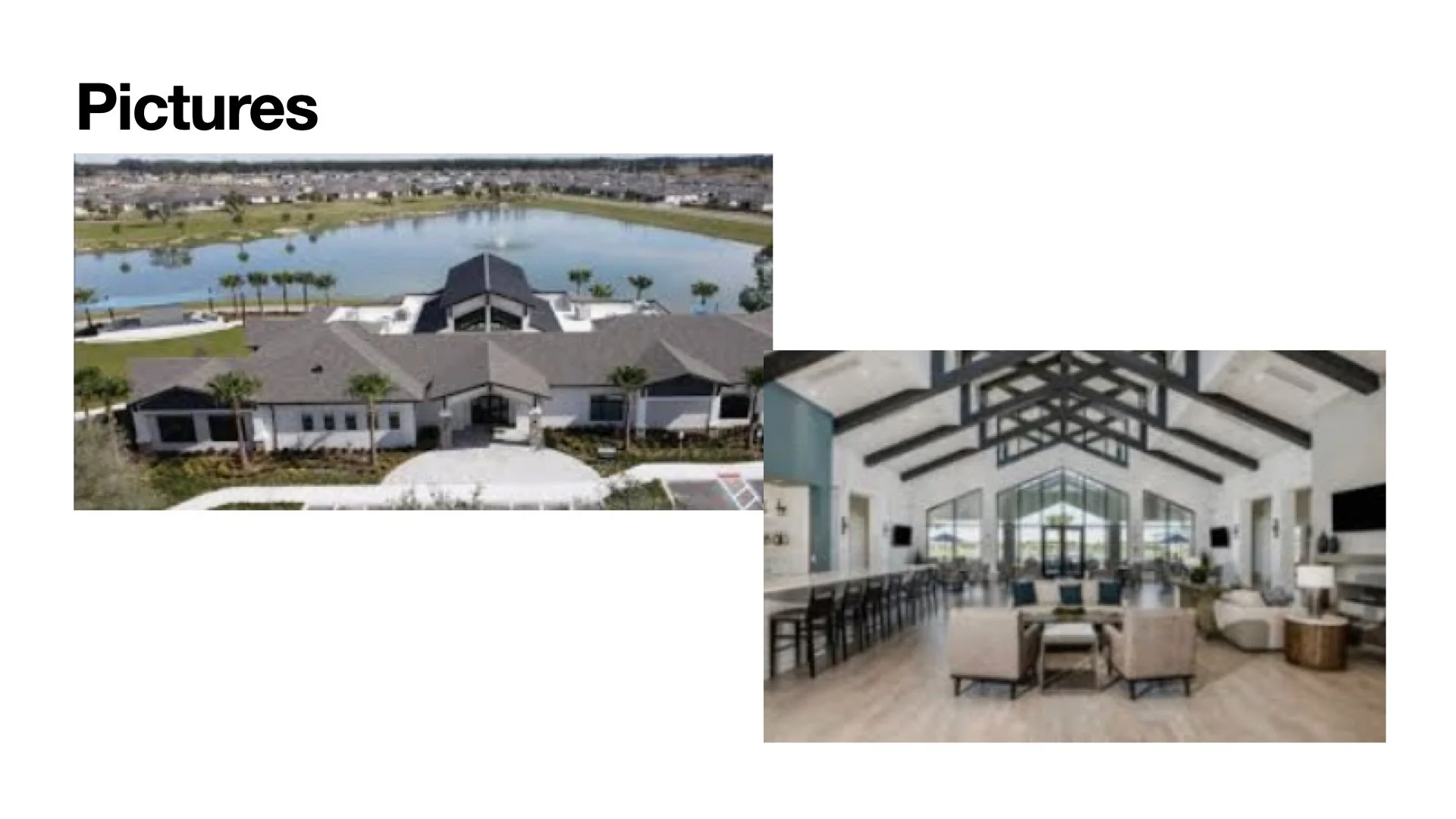
If you enjoyed the first session, and I believe most of you did, feel free to invite someone you think would benefit from this. The room is plenty big enough, and I think we could comfortably accommodate another ten or twenty people. That said, please coordinate with the Lifestyle Center, as they manage the scheduling and the space. I have nothing to do with classes at the Creek. I am not associated with Stone Creek or the Lifestyle Center in any way, shape, or form. They were kind enough to provide the venue, and you will want to clear any additional attendees through them.
— — —
A Word About Who I Am and How This Works
I have a variety of businesses and professional firms, which you are welcome to read about if you are curious. You will also notice that I did not ask for and will not solicit your name, your email address, or your mailing address. You are attending these sessions without any cost or obligation whatsoever. I enjoy teaching this material, and it gives me an opportunity to introduce myself to people I have never met before. If you ever decide to contact me for professional services, that is entirely your decision. You will not be solicited. If you should ever receive anything from me in the mail, it will only be because your name happened to appear on a general mailing list, not because you attended this series.
— — —
Online Access and Beyond Stone Creek
I have placed a link to the session materials on the website. Stone Creek residents will need to enter their Lifestyle password to access the page. If you have shared this page with someone who lives outside of Stone Creek, whether in The Villages, Ocala Palms, On Top of the World, Oak Run, or any other retirement community in the area, I want them to know that I am happy to bring this series to their community as well. I enjoy teaching this material, and I am more than willing to replicate it, either as a four-part series or in a condensed format, depending on what works best for the group. I will also be hosting this at my office in our conference center, likely in the fall of this year. So there will be additional opportunities for those who want them.
— — —
Thank You, and Looking Ahead
To everyone who attended session one, thank you. That was one of the best groups I have had the pleasure of standing in front of. I believe most of you found it genuinely interesting, and I hope to see every one of you back for session two. We have a lot of ground still to cover, and sessions two, three, and four will deliver the kind of hands-on, practical skill sets that will take what you learned in session one and put it to real use. The foundation has been laid, and now we get to build on it.
So bring your devices, bring your curiosity, and if you know someone who would enjoy this, bring them along too. We are just getting started.
Tippecanoe and Tyler Too, I'm out of here.
— Paul Truesdell