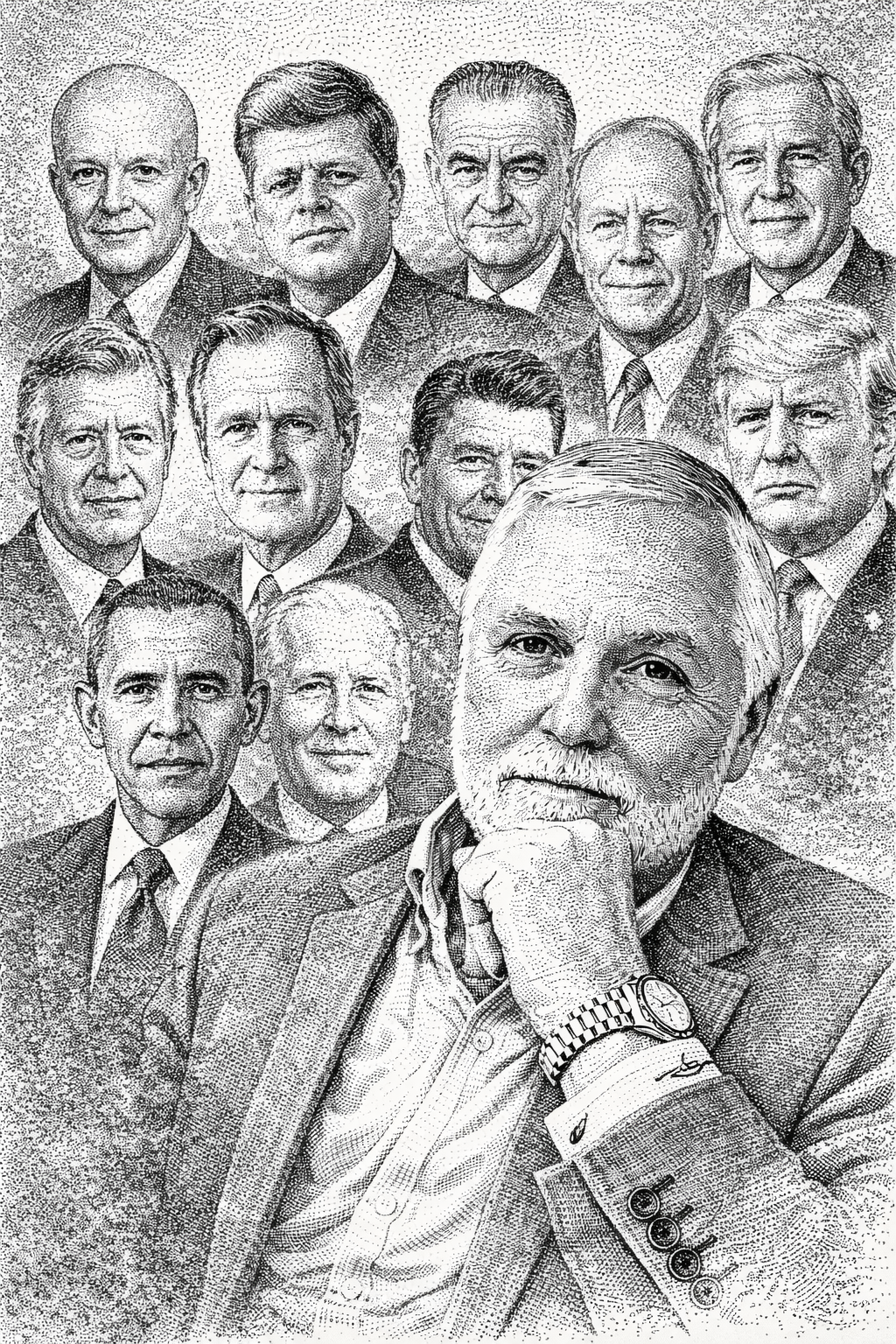
The history of U.S. submarine development and deployment since the Eisenhower administration centers primarily on the transition to and expansion of nuclear-powered submarines, which revolutionized undersea warfare. This includes fast-attack submarines (SSNs) for anti-submarine/anti-surface roles, intelligence, and strike missions, and ballistic missile submarines (SSBNs) for strategic nuclear deterrence. Diesel-electric submarines largely phased out for frontline roles by the late 1950s/early 1960s.Key milestones include Admiral Hyman G. Rickover's leadership in nuclear propulsion, the Polaris/Poseidon/Trident missile systems for SSBNs, and advanced designs emphasizing stealth, speed, and multi-mission capability.Here is a breakdown by presidential administration, starting with Dwight D. Eisenhower (note: development often spans administrations due to long shipbuilding timelines; focus is on major initiations, key commissions, deployments, and policy/strategic emphases during each term).Dwight D. Eisenhower (1953–1961)
Eisenhower
The nuclear submarine era began under Eisenhower. The world's first nuclear-powered submarine, USS Nautilus (SSN-571), had its keel laid in 1952 (under Truman), but was launched in 1954 (christened by Mamie Eisenhower) and commissioned in September 1954. Nautilus demonstrated unlimited submerged endurance and achieved the first under-North Pole transit in 1958 (Operation Sunshine), earning a Presidential Unit Citation.
Eisenhower personally supported the program, riding submerged on USS Seawolf (SSN-575) in 1957 and viewing Polaris tests on USS Patrick Henry (SSBN-599) in 1960.
Development accelerated on early nuclear classes: Skipjack-class (first with teardrop hull for better submerged performance; lead ship commissioned 1959) and initial SSBNs. The Fleet Ballistic Missile (FBM) program began, leading to Polaris missiles.
By the end of his term, 18 nuclear-powered boats had launched/commissioned. The first SSBN, USS George Washington (SSBN-598), was laid down in 1957 and commissioned just after his term (December 1959), with the first submerged Polaris launch in 1960. Submarines shifted toward Cold War deterrence.John F. Kennedy (1961–1963)
The Polaris program matured rapidly. USS George Washington began the first deterrent patrol in November 1960 (spanning into Kennedy's term), establishing the sea-based leg of the nuclear triad.
Multiple Polaris SSBNs (George Washington-class and early Ethan Allen-class) commissioned and deployed. Attack submarine development continued with Thresher-class (lead ship USS Thresher SSN-593 commissioned 1961), emphasizing deeper diving and advanced sonar, though Thresher was lost in 1963 (after Kennedy's death).
Kennedy
Kennedy emphasized flexible response, bolstering conventional and nuclear capabilities, including submarine forces for deterrence against Soviet threats.
Johnson
Lyndon B. Johnson (1963–1969)
SSBN deployments expanded dramatically under the "41 for Freedom" goal (41 Polaris SSBNs). Lafayette-class and early Poseidon-conversion boats commissioned, with improved missiles.
Attack submarine force grew with Sturgeon-class (lead ship commissioned 1967), focused on quieting and anti-submarine warfare (ASW) against Soviet subs.
Submarines supported Vietnam-era operations indirectly (e.g., intelligence, special ops), though primary focus remained Cold War deterrence.
Nixon
Richard Nixon (1969–1974)
Poseidon C-3 missile deployed on SSBNs (1970s conversions), increasing warheads via MIRV.
Ultra-quiet Los Angeles-class SSN program initiated (lead contract 1971; first boat laid down 1972).
Submarines played key deterrent roles amid SALT I negotiations (1972), which limited strategic systems but preserved SSBN advantage.Gerald Ford (1974–1977)
Los Angeles-class construction continued; USS Los Angeles (SSN-688) commissioned 1976.
Trident I missile development advanced for future SSBNs. Focus on maintaining submarine superiority amid détente.
Carter
Jimmy Carter (1977–1981)
Trident program progressed; Ohio-class SSBN lead ship laid down 1976 (commissioned 1981).
Los Angeles-class expanded. Carter (former nuclear submarine officer) supported naval modernization despite budget constraints.
Reagan
Ronald Reagan (1981–1989)
Massive 600-ship Navy buildup included rapid Ohio-class SSBN commissioning (beginning 1981) with Trident I (later Trident II).
Los Angeles-class production peaked; Seawolf-class initiated (lead ship laid down 1989) for superior ASW/stealth against advanced Soviet subs.
Submarines deployed aggressively in Cold War endgame, including shadowing Soviet forces.
Bush
George H. W. Bush (1989–1993)
Cold War ended; Seawolf-class first boat (USS Seawolf SSN-21) commissioned 1997 (development during Bush).
Ohio-class continued; post-Cold War drawdown began, but SSBN deterrence remained core.
Clinton
Bill Clinton (1993–2001)
Los Angeles-class completed (last commissioned 1996).
Four Ohio-class SSBNs converted to SSGNs (guided missile subs with Tomahawk cruise missiles/special ops) planned later but roots in this era.
Virginia-class attack submarine program initiated (contract 1998; lead ship laid down 1999) as cost-effective Los Angeles successor.
Bush
George W. Bush (2001–2009)
Virginia-class first boat (USS Virginia SSN-774) commissioned 2004.
SSGN conversions of four Ohio-class began (completed 2007).
Submarines supported post-9/11 operations (e.g., Tomahawk strikes from SSNs/SSGNs in Afghanistan/Iraq).
Obama
Barack Obama (2009–2017)
Virginia-class production ramped up (Blocks I–III).
Ohio-class sustainment; early planning for Ohio replacement (now Columbia-class SSBN).
Submarines key in Asia-Pacific rebalance against China.
Trump
Donald Trump (2017–2021)
Columbia-class SSBN program advanced (lead boat contract 2017; construction began 2021).
Virginia-class continued (Blocks IV+); emphasis on undersea dominance vs. peer competitors (China/Russia).
Biden
Joe Biden (2021–2025)
Columbia-class construction ongoing (first boat delivery expected late 2020s/early 2030s).
Virginia-class production (aiming 2–3 per year); focus on industrial base challenges and AUKUS pact (U.S. to provide Virginia-class to Australia in 2030s).
Trump
Donald Trump (2025–present, as of January 2026)
Early in the second non-consecutive term; submarine programs (Columbia, Virginia) continue under existing budgets/plans, with emphasis on naval readiness amid great-power competition.
U.S. submarine development post-Eisenhower transformed from experimental nuclear propulsion to a dominant, stealthy force central to national defense, with ~68 boats today (50+ SSNs, 14 SSBNs, 4 SSGNs).
The shift prioritized survivable nuclear deterrence and multi-role undersea superiority.