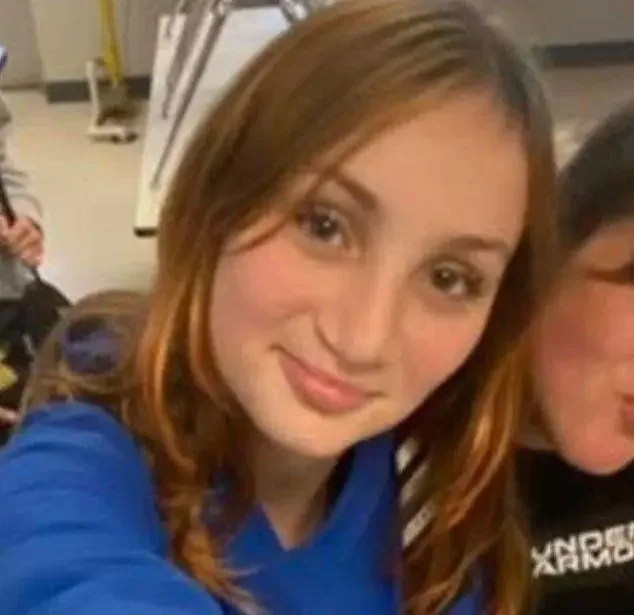
Let me be clear from the start. What I'm about to discuss involves allegations. In America, every person accused of a crime is innocent until proven guilty in a court of law, even when there is overwhelming evidence. That principle stands as one of the cornerstones of our republic, and I will not abandon it even when the accusations make my blood boil. But if the facts as reported hold up, we need to have a very uncomfortable conversation that a polite society has been dodging for decades.
The Disgusting Facts
Two teenage boys in Florida, Gabriel Williams age sixteen and Kimahri Blevins age fourteen, have been charged with first degree premeditated murder in the death of fourteen-year-old Danika Troy. According to prosecutors, these two allegedly lured their classmate into the woods, shot her multiple times, and then set her body on fire. Reports suggest Danika may have been drawn out there because she had a crush on one of the boys. There's also talk of some online social media dispute over posts she made. The arraignment is scheduled for next month, and until every fact comes out in court, we must deal in allegations and accusations.
Think About It
Now here's where I need you to stop reading for just a moment. Close your eyes if you have to. Think about your daughter at fourteen. Your granddaughter. Your niece. Your sister. Picture her walking into those woods, maybe nervous and excited because she thinks a boy she likes finally noticed her. Now picture what allegedly happened next. Take your time. I'll wait.
Hard to think about, isn't it. Some of you couldn't even finish the exercise. That's okay. That reaction, that visceral response in your gut, that's your humanity talking. Hold onto it because we're going to need it for the rest of this conversation.
Premeditated
The question that decent people are asking themselves right now is simple on the surface but complicated underneath. Does the age of the perpetrators matter when the crime is this cold blooded, this calculated, this devoid of anything resembling human decency? These weren't toddlers who didn't understand what they were doing. A sixteen-year-old and a fourteen-year-old know exactly what a gun does. They know exactly what fire does to a human body. They allegedly planned this. Premeditated means they thought about it beforehand. They made decisions. They carried them out.
The Law
Let's talk about Florida law since that's where this tragedy occurred. In the Sunshine State, any child of any age can be tried as an adult for certain serious crimes, and first-degree murder sits right at the top of that list. Florida operates under what's called direct file, meaning prosecutors have the discretion to file charges directly in adult court without a judge's approval for juveniles fourteen and older accused of serious felonies. For capital offenses like first degree murder, there is no minimum age floor. A prosecutor can seek to try a child as an adult regardless of how young they are if the crime warrants it. The state made this decision deliberately. Floridians decided through their elected representatives that some crimes are so heinous that the age of the perpetrator becomes secondary to the nature of the act.
States Rights
Other states handle this differently, and the patchwork of laws across America would make your head spin. In Texas, juveniles as young as fourteen can be certified to stand trial as adults for capital murder and other serious offenses. California recently raised its minimum age to sixteen for most offenses but maintains exceptions for the most violent crimes. New York set its age at thirteen for murder charges in adult court. Some states like Vermont have been pushing the age higher, up to eighteen for most crimes, while others maintain that certain acts demand adult consequences regardless of the birthday on the defendant's driver's license. The debate rages on in state legislatures every year, with advocates on both sides making passionate arguments. But here's what nobody on the rehabilitation side ever seems to address adequately. When a fourteen year old and a sixteen year old allegedly plan and execute a murder, then attempt to destroy the evidence by burning the body, at what point do we stop pretending this is a matter of youthful indiscretion?
The Financial Cost
Now let's talk about something that makes people uncomfortable for entirely different reasons. Money. The cold hard economics of violent crime. Because while we're busy debating the philosophical questions of juvenile justice, somebody has to pay the bills. And those bills add up fast.
Conservative academic estimates put the total economic impact of a crime like this somewhere in the neighborhood of five million dollars, and frankly that number might be low. Let me walk you through how we get there because most Americans have no idea how expensive it is when someone decides to take (murder) a human life.
Start with the investigation. Law enforcement doesn't work for free. I know as I’ve been there. You've got detectives pulling overtime, forensic specialists processing the crime scene, lab technicians analyzing evidence, officers canvassing neighborhoods and conducting interviews. The search alone for Danika, before they found her body, consumed resources. Estimated cost for a thorough homicide investigation runs anywhere from fifty thousand to several hundred thousand dollars depending on complexity. And that number is on the very low side. When you're dealing with multiple suspects, a remote crime scene, and forensic evidence that includes fire damage, you're pushing toward the higher end of that range and far beyond.
Then comes prosecution. The state attorney's office will dedicate experienced prosecutors to this case, and they won't be working on anything else for months or potentially years. Support staff, expert witnesses, forensic consultants, and the administrative machinery of the court system all cost money. A capital murder trial with multiple defendants can easily run the state half a million dollars or more. If there are appeals, and there will be appeals, you can double or triple that figure over the next decade.
Defense costs money too, and before you say you don't care about that, remember that public defenders are paid with your tax dollars. These defendants will receive legal representation whether they can afford it or not, as the Constitution requires. Complex murder cases with juvenile defendants facing adult charges require experienced defense attorneys, investigators, mental health experts, and mitigation specialists. That tab gets picked up by the citizens (taxpayers) of Florida.
Incarceration isn't cheap either. If convicted and sentenced to life in prison, housing an inmate in Florida costs taxpayers approximately twenty-five thousand dollars per year. A sixteen-year-old sentenced to life without parole could spend sixty years or more behind bars. Do the math. That's one point five million dollars per defendant just for the cost of keeping them locked up, and that assumes healthcare costs don't explode as they age, which they will.
That Was Just The Start
But all of that represents just the direct costs to the criminal justice system. The economic devastation spreads far wider than any government budget line item.
Danika Troy's family will never be the same, and neither will their finances. Her parents have already missed work and will continue to miss work as they deal with funeral arrangements, court appearances, and the simple crushing reality of grief that makes showing up to a job feel impossible. Lost wages for family members in the first year alone could easily reach fifty thousand dollars or more. Many parents in this situation never fully return to their previous earning capacity. Depression, anxiety, and post-traumatic stress don't punch a time clock, and employers only have so much patience.
Funeral and burial expenses typically run between ten and twenty thousand dollars. Counseling for surviving family members, and they will need counseling, adds thousands more per year for years to come. Some families relocate because they cannot bear to live in the community where their child was murdered (a very common occurance). The costs of selling a home, buying another, and rebuilding a life somewhere else can reach six figures without breaking a sweat.
Then there are the lost future earnings of the victim herself. Danika Troy will never graduate high school, never attend college, never enter the workforce, never pay taxes, never contribute to Social Security, never start a business or raise a family. Economists who calculate the value of a statistical life for policy purposes typically use figures between seven and ten million dollars. Even using more conservative lifetime earnings projections for a fourteen-year-old girl, you're looking at somewhere between one and two million dollars in economic productivity that simply vanished from our society.
The ripple effects touch the community too. Property values in the immediate area may decline. Parents pull their children from schools where violence occurred. Businesses see reduced traffic as people avoid areas associated with tragedy. Tourism, which Florida depends on, takes a hit every time the state makes national news for the wrong reasons. These costs are harder to quantify but no less real.
Five Million Doesn’t Add Up
Add it all up. Investigation, prosecution, defense, incarceration, lost wages for the victim's family, counseling, relocation, funeral expenses, lost lifetime earnings of the victim, and community economic impact. Five million dollars starts to look like a conservative estimate. Some researchers who study the true cost of violent crime put the figure for a single homicide closer to seventeen million dollars ($17,000,000.00) when you account for everything.
And here's the part that should make every taxpayer furious. All of this money, every single dollar, gets spent cleaning up a mess that didn't have to happen. This wasn't an earthquake or a hurricane. This wasn't an accident. If the allegations prove true, this was a choice. Two young men allegedly made a decision to end a young woman's life, and now society foots the bill measured in millions of dollars and immeasurable human suffering.
Take Chicago As of December 23, 2025
422 murders – year to date.
$5,000,000 total cost per murder.
$2,110,000,000.00 total cost to Chicago.
That’s over two billion dollars.
Chicago's fiscal year budget for 2026 is roughly $16.6 billion; however, the city faces significant fiscal challenges, including a projected $1.15 billion deficit.
And So, When Is A Murderer An Adult?
So, when is the right age to try someone as an adult? When is the right age to consider the ultimate punishment our justice system allows? These are questions that make people squirm in their seats. Good. They should.
Comfortable People Don't Solve Hard Problems
Here's the practical reality that rehabilitation enthusiasts never want to address. What message gets sent to every other teenager in America if these two, assuming guilt is proven beyond reasonable doubt, receive anything less than the maximum consequences the law allows? The message is simple and devastating. You can do the unthinkable and society will pat you on the head, talk about your difficult childhood, and have you back on the streets before you're old enough to rent a car.
I've heard every argument in the book. Their brains aren't fully developed. They can be rehabilitated. They're products of their environment. Save it. When you can look me in the eye and tell Danika Troy's parents that the boys who allegedly shot their daughter multiple times and burned her body deserve a second chance at life while their child has no chances left at all, then we can have that conversation.
If the evidence proves what prosecutors allege, there exists nothing on this earth that can mitigate this crime. No sad backstory. No mental health diagnosis. No troubled home life. Nothing. Some acts are so far beyond the pale of human decency that explanations become excuses, and excuses become insults to the victim and her family.
The Process – Slow But Steady
The wheels of justice turn slowly, and they should. Every defendant deserves due process. Every piece of evidence deserves scrutiny. But when that process concludes, if guilt is established, society has an obligation to respond with consequences that match the gravity of the offense. Anything less tells our children that evil has a discount rate based on the birthday of the perpetrator.
Danika Troy was fourteen years old. Stop. Let’s repeat that: Danika Troy was fourteen years old. She deserved to grow up. She deserved to fall in love for real someday. She deserved to graduate, get a job, maybe have children of her own. She deserved a life. Her family deserved to watch her live it. Instead, they got a funeral bill and a lifetime of court dates.
Five million dollars on the low-low end. That's the economic impact of one evil act allegedly committed by two teenagers who decided that a classmate's life wasn't worth preserving. But no dollar figure captures what was really lost that day in those Florida woods. Some costs can never be calculated, and some debts can never be repaid. The least we owe Danika's memory is justice without asterisks, without excuses, and without the soft bigotry of low expectations for young people who allegedly committed an adult crime with adult premeditation and adult cruelty.