Sunday, May 31, 2026
Truesdell Brief
HOA Overreach at the Polls: When Private Rules Collide with Florida Election Law
In the sunbaked neighborhoods of Florida, homeowners' associations stand as quiet guardians of property values, orderly streets, and shared amenities. They serve a worthy purpose, much like the ranchers of old who built fences to protect their herds and maintain the peace. Yet even the sturdiest fence must give way before the broader law of the land. A troubling number of HOAs, their security teams, and access-control companies are testing this truth during election season—and risking serious consequences in the process.
Florida statute draws a bright, unmistakable line. Under Florida Statutes § 102.031(4), a 150-foot no-solicitation zone surrounds every polling place and early voting site. Inside that boundary, campaigning, signs, handouts, and voter outreach are strictly off-limits. Outside that zone, however, the law is equally firm: "The owner, operator, or lessee of the property… or an agent or employee thereof, may not prohibit the solicitation of voters by a candidate or a candidate's designee during polling hours."
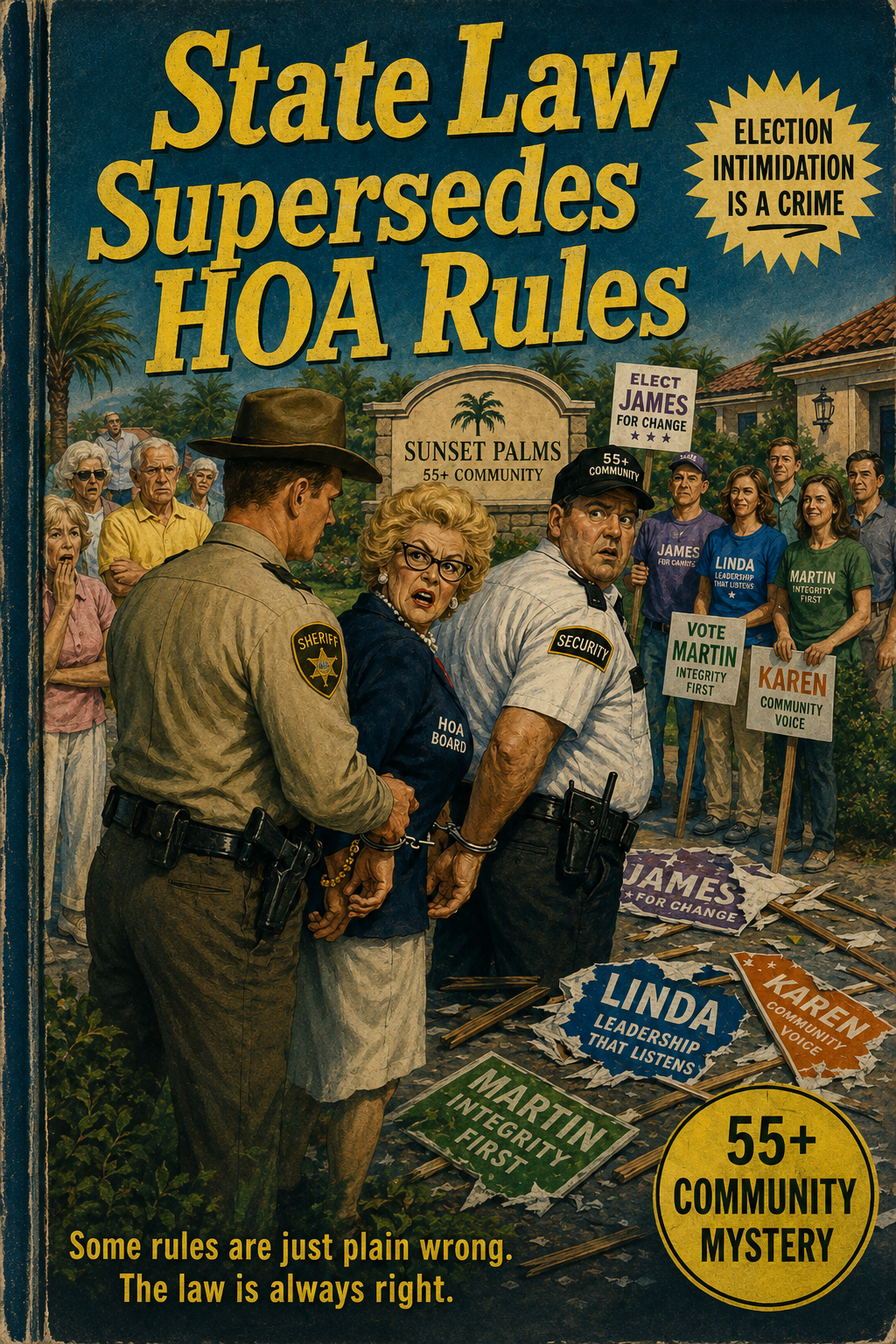
This protection applies squarely to private property and HOA-governed areas used for voting. Common HOA "no solicitation" rules—those blanket policies against door-to-door sales, flyers, or commercial activity—do not under any circumstance apply to political candidates, their campaigns, or their staff. State election law overrides those covenants when the democratic process is at stake. The legislature understood that self-government requires breathing room for persuasion and petition. Private associations do not hold veto power over the ballot box.
The High Cost of Standing in the Way
HOAs, security guards, and gate companies that deny access, issue trespass warnings, or physically block supporters standing peacefully beyond the 150-foot line are not merely enforcing community standards—they are obstructing the electoral process. Election officials and law enforcement can step in immediately. Persistent interference opens the door to complaints with the Florida Elections Commission and potential criminal exposure.
While the specific access provision may not carry its own penalty, related actions—voter intimidation, coercion, threats, or willful obstruction—fall under Chapter 104 of the Florida Statutes. These can rise to third-degree felonies, carrying up to five years in prison and substantial fines. Jail is no pleasant place for a board member or security contractor who mistakes their authority for sovereignty.
Civil lawsuits bring their own pain: candidates can seek immediate injunctions to force access, plus recovery of attorney's fees and damages. Court battles are expensive, time-consuming, and damaging to an HOA's reputation and reserve funds.
The Sore Subject of Signage
Political signage presents another flashpoint. Many HOAs maintain draconian restrictions—limits on size, number, placement, or outright bans on yard signs of any kind. In ordinary times, such rules often hold. Florida courts have generally upheld the right of private associations to control aesthetics through properly adopted covenants, provided they are applied evenly and not in a discriminatory manner.
Yet near polling locations, these rules must yield to the same election protections. Signs and activity beyond the 150-foot zone enjoy statutory shelter. Boards that order removal of lawful campaign signs in these areas, or direct security to tear them down, risk crossing the same legal line. Uniform enforcement is essential: an HOA cannot single out one candidate's signs while tolerating others, seasonal banners, or "For Sale" postings. Selective enforcement invites both civil claims and accusations of election interference.
A Clear Warning to HOAs, Guards, and Access Companies
Let this serve as a plain-spoken warning shot across the bow. The prudent board consults competent election counsel before election season begins. Review your covenants against state law. Train security personnel and gate staff on the 150-foot rule and the explicit prohibition against blocking candidates. Remember: no solicitation HOA rules do not, and I repeat, DO NOT under any circumstance apply to campaigns, candidates, and their staff. The safest course is straightforward: respect the boundaries marked by election officials and permit peaceful solicitation and signage outside that zone.
Candidates and supporters should document every denial—photos, video, witness statements, and written communications—and contact the local Supervisor of Elections at once. Calm, factual persistence paired with clear knowledge of the statute remains the most effective response.
As the old trail wisdom reminds us, good fences make good neighbors, but no fence, no gate, and no private rule stands taller than the law of the state—especially when free elections are at stake. HOAs that honor this balance strengthen both their communities and the republic itself. Those who test the statute's limits may discover, to their lasting regret, that lawsuits drain treasuries, criminal scrutiny tarnishes reputations, and the quiet dignity of self-government carries more weight than any set of covenants, however well-intentioned.
Stay informed. Respect the process. And defend the open road of lawful persuasion that has long defined our American experiment.